
Home DNA Test Kit in India: How to Order & Use It

You’ve tried the diet your colleague swears by. You’ve followed the fitness plan that worked for your friend. Yet the results never quite match what everyone promised. That’s often because the plan was built for someone else’s body, not yours.

A home DNA test kit offers a different starting point: your own genes. And the best part is that 

you don’t need to visit a lab, wait in a queue or give a blood sample. Everything begins with a small tube of saliva collected at home. Here’s how to order a kit from GeneSupport, use it correctly and make the most of your results.


What Is a Home DNA Test Kit?

It lets you collect a sample yourself, usually saliva, and send it to a lab for analysis. The lab reads specific genetic markers linked to how your body handles food, nutrients, weight and daily habits.

This field is called nutrigenomics: the study of how your genes respond to what you eat. It doesn’t diagnose disease. Instead, it helps you understand your natural tendencies so you can make choices that suit your body. GeneSupport has worked in this space for over 20 years, guided by one idea: precision in personalisation.


What Can Your Genes Tell You?

GeneSupport offers several tests, so you can pick the one that matches your goal:

If digestion is your main concern, GeneSupport’s Gut Microbiome Profiling uses a stool sample instead of saliva to show what’s happening in your gut.


How to Order a Home DNA Test Kit from GeneSupport

Ordering takes just a few minutes:

  1. Choose your test. Visit genesupport.in and select the test that fits your goal. Not sure which one? Speak to the team for guidance.
  2. View the test preview. See exactly what your report will cover before you pay.
  3. Place your order online. Pay securely and share your delivery details.
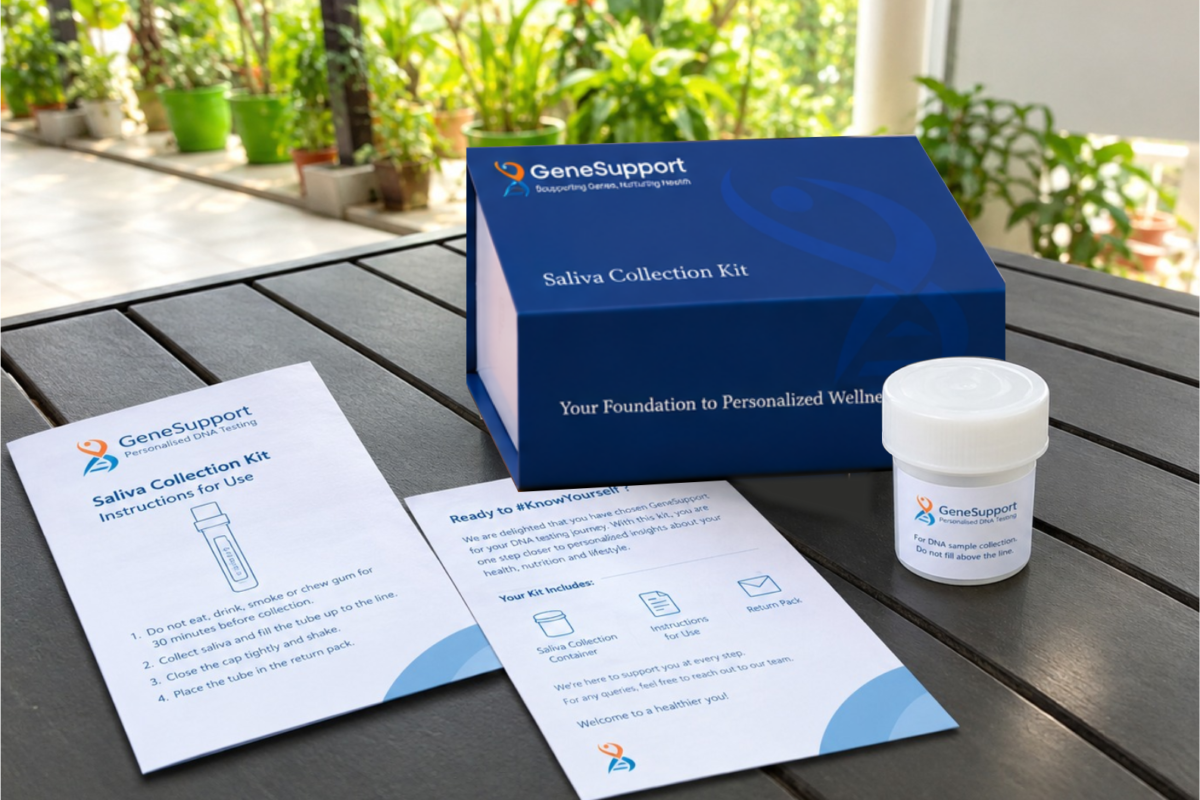
  4. Receive your kit at home. Your DNA test kit arrives with a collection container, test request format, instructions and a return pack. 


How to Use Your DNA Test Home Kit: Step by Step

Using a DNA test procedure for home kit is simple, but small details affect the quality of your sample. Follow these steps closely.

Before you collect

Don’t eat, drink, smoke, chew gum or brush your teeth for at least 30 minutes beforehand. Food particles and toothpaste can contaminate the sample. Morning, before breakfast, is often the easiest time.

Collecting your saliva sample

  1. Wash and dry your hands.
  2. Open the collection tube without touching the inside of the cap or tube.
  3. Gently pool saliva in your mouth and spit into the tube until you reach the marked fill line. Bubbles don’t count towards the line.
  4. Close the cap firmly. In most kits, this releases a stabilising liquid that protects your DNA.
  5. Shake the tube gently for a few seconds to mix.
Registering and returning your kit

Register your kit using the code provided, so your sample is linked to you. Then seal the tube in the return pack and send it back as instructed. 



scan the QR code to know more about the steps to use the DNA kit at home

Common Mistakes to Avoid

Most failed samples come down to a few simple errors:

  • Collecting too soon after eating or drinking
  • Filling below the line, or counting bubbles as saliva
  • Forgetting to register the kit before sending it
  • Leaving the sample in heat or direct sunlight before it’s sent

Getting these right saves you the wait of a repeat collection.


What Happens After You Send Your Sample?

Once your sample reaches the lab, it’s processed in a quality-accredited facility. Technicians extract your DNA and analyse the genetic markers covered by your chosen test. 

Your report then lands in your inbox, but GeneSupport doesn’t stop there. An online consultation with an expert walks you through your results and turns them into a practical plan for food, weight and lifestyle. All consultations happen online, so you can join from anywhere in India.

Your GeneSupport plan works alongside any ongoing medical care. It doesn’t replace your doctor’s advice or affect your current treatment.


Is Your Genetic Data Safe and Private?

Your genetic data is deeply personal, so it is your right to ask. Under India’s Digital Personal Data Protection Act, 2023, you have rights over how your data is collected and used. GeneSupport’s tests are processed in a quality-accredited lab, and your results are shared only with you.


The Bottom Line

A home DNA test kit takes the guesswork out of eating and living well. Ordering is quick, collection takes minutes, and the real value comes from understanding what your results mean. With over 20 years of experience, a quality-accredited lab and expert online consultations, GeneSupport helps you move from a report to a plan built for your body. See what your report will include before you decide.


Frequently Asked Questions

How accurate is a home DNA test kit? 

Accuracy depends mainly on the lab and on collecting the sample correctly. A sample processed in a quality-accredited lab, collected as instructed, gives reliable results.

Does the test hurt? 

Not at all. You simply spit into a tube. There are no needles and no clinic visit.

Do I need to repeat the test? 

Usually not. Your genes stay largely the same throughout your life, with changes being rare, so in most cases one DNA test gives you insights you can use for years to come. 

Can I take the test if I’m on medication? 

Yes. The test reads your genes, not your current health status. Your plan is designed to work alongside your ongoing treatment, not replace it.


Note: Prefer to shop on Amazon? The Gene Support DNA test kit is also available on Amazon India.
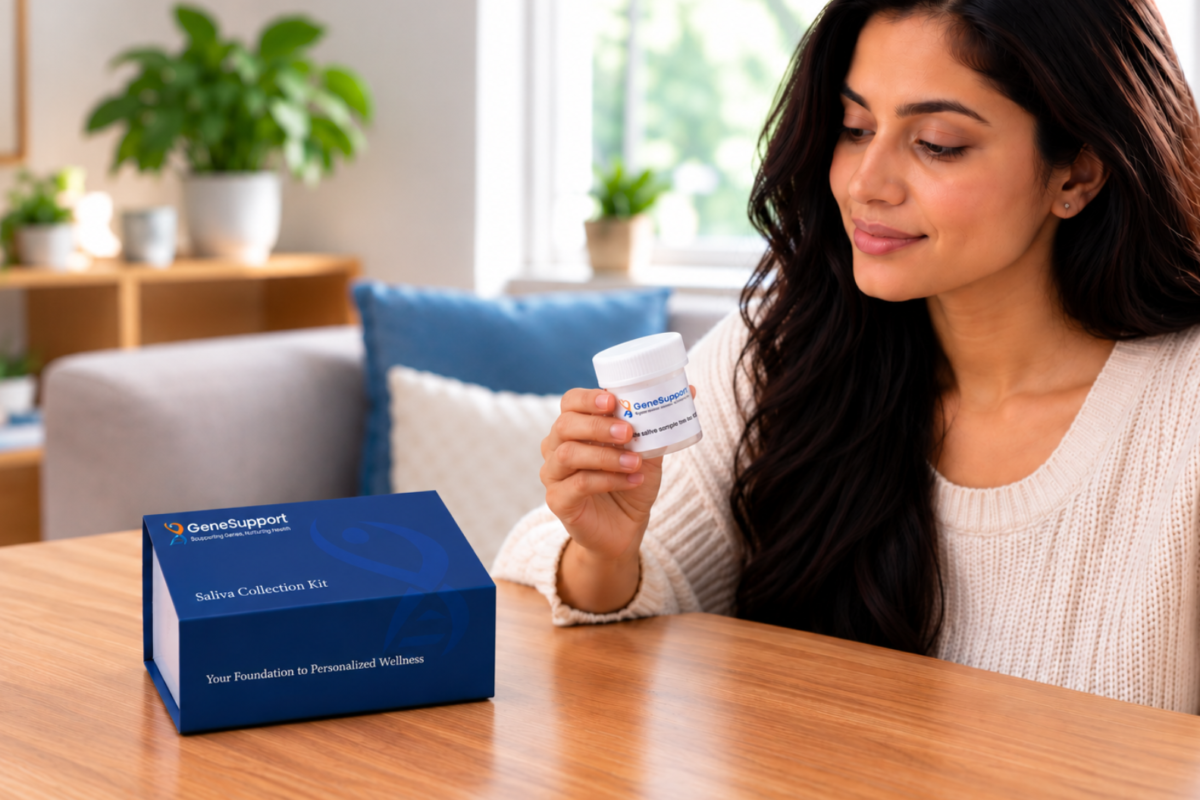
Woman using the GeneSupport DNA saliva collection kit for personalised wellness and genetic testing.

DNA Test Procedure: How a Home DNA Test Kit Works

Can a DNA Test Be Done at Home?

Yes, many DNA tests allow you to collect your sample at home. But there is an important distinction: collecting your DNA sample at home does not usually mean analysing your DNA at home. The sample is generally sent to a laboratory for testing.

This makes DNA testing more accessible without compromising the importance of laboratory analysis.

But what happens after you order a kit? How is DNA extracted from a saliva sample? And how reliable are the results?

Understanding the DNA test procedure helps you know what to expect, what to check before buying a test and how to interpret the information you receive.


What Is a DNA Test?

DNA carries genetic information inherited from our parents. A DNA test examines this material to identify specific genetic variations or other features, depending on the purpose of the test.

DNA testing is used in several fields, including:

  • Genetic health testing: Investigating selected variants associated with inherited conditions.
  • Nutrigenomics: Studying how genetic variations may relate to nutrition and lifestyle.
  • Pharmacogenetics: Examining genetic factors that can influence responses to certain medicines.
  • Ancestry testing: Exploring genetic ancestry and biological relationships.

These tests do not all examine the same genes or answer the same questions. A test designed to study selected lifestyle-related genetic variations, for example, is not equivalent to a diagnostic test for an inherited disease.

Understanding this distinction is the first step towards choosing the right test.


How Does the DNA Test Procedure Work?

The process generally involves five stages, although the exact steps depend on the test, sample type and laboratory method.

Step 1: Choose the Right DNA Test Kit

Start with a simple question: what do you want to learn?

Your objective could be to investigate a specific genetic condition, explore ancestry or understand selected genetic factors relevant to nutrition and lifestyle.

For example, a nutrigenomics test may examine genetic variations associated with aspects of nutrition, caffeine metabolism or exercise response, depending on the panel.

Before ordering, check what the test covers, which laboratory performs the analysis, how the sample is collected and what support is available to interpret the report.

A longer list of genes does not automatically make a test more useful. What matters is whether the test is appropriate for your objective and whether its findings are supported by relevant evidence.

Step 2: Receive Your Home DNA Test Kit

A home DNA test kit typically contains a saliva collection tube or cheek-swab device, instructions, sample identification details and packaging for returning the sample.

The contents vary between providers.

Some tests use saliva, while others collect cells from the inside of the cheek. Preparation requirements can also differ. For instance, a particular saliva kit may instruct you not to eat or drink for a specified period before collection.

Read the instructions supplied with your kit carefully. Do not assume that the collection procedure is identical for every DNA test.

Step 3: Collect Your DNA Sample at Home

Can We Check DNA at Home?  Not exactly, but sample collection for many DNA tests can be completed at home.

In a saliva-based test, you provide saliva using the supplied collection device. In a cheek-swab test, you gently collect cells from the inside of your cheek using the specified swab.

These cells contain DNA that can be extracted for laboratory analysis.

To help ensure your sample is suitable for testing:

  1. Follow the kit’s preparation instructions.
  2. Use the supplied collection device correctly.
  3. Avoid contaminating the sample or collection equipment.
  4. Close and label the sample as instructed.
  5. Complete any required sample registration.
  6. Return it using the prescribed packaging and delivery method.

Incorrect collection, handling or labelling can delay testing or make the sample unsuitable for analysis.

Once the sample is ready, it is sent to the designated laboratory. This is where genetic analysis generally takes place.

Step 4: Laboratory Analysis of Your DNA

The laboratory processes your sample using methods appropriate to the test.

DNA extraction: Genetic material is separated from the collected cells.

Quality assessment: The laboratory checks whether the extracted DNA meets the requirements for the intended analysis.

Genetic analysis: The laboratory examines the relevant genetic features using a suitable method. Depending on the test, this may involve genotyping, DNA sequencing or another analytical technique.

Data assessment: The resulting data are processed and checked according to the laboratory’s procedures.

Report preparation: Findings are interpreted within the scope of the test and compiled into a report.

Not every DNA test uses the same technology. The method must be suitable for the genetic features being examined, and the laboratory should have appropriate quality-control and validation procedures.

This is why understanding the test’s scope and laboratory process matters more than relying on broad claims about the number of genes examined.

Step 5: Receive and Understand Your DNA Report

After the analysis and required quality checks, the report is prepared. The turnaround time depends on the testing service, sample quality and laboratory workflow.

The next step is understanding what the findings mean.

For a nutrigenomics test, selected genetic variations may provide information relevant to aspects of nutrition or lifestyle, depending on the panel and the supporting evidence.

However, genes are only one influence on health. Dietary habits, physical activity, sleep, medical history, environment and other factors also matter.

A genetic report should therefore be interpreted in context. It is not a complete assessment of your health, and it should not be used as a substitute for medical evaluation when one is needed.


Is a DNA Test 100% True?

The honest answer is that no single accuracy claim applies to every DNA test.

A properly validated test can accurately identify the genetic variants it is designed to detect. However, analytical performance depends on the testing method, sample quality and the variants being examined.

It is also important to distinguish between three concepts:

  • Analytical validity: How accurately does the test detect the genetic feature it is designed to measure?
  • Clinical validity: How reliably is that feature associated with the trait, condition or risk being assessed?
  • Clinical utility: Does the information help inform a meaningful decision?

These are different aspects of test quality.

For example, a test may accurately identify a genetic variant without being able to predict exactly how a person will respond to a particular diet or whether they will develop a specific condition.

Similarly, not finding a particular variant does not rule out every possible genetic explanation for a disease.

When evaluating a DNA test in India, look beyond claims such as “100% accurate.” Ask what the test measures, what evidence supports the interpretation and what limitations apply.


What Should You Check Before Buying a DNA Test in India?

Before ordering a home DNA test kit, consider these five factors.

  1. Test scope: Are the genes or genetic markers examined clearly specified?
  2. Laboratory quality: Are appropriate analytical methods, quality controls and validation procedures in place?
  3. Accreditation: Can you verify the laboratory’s credentials and the scope covered by its accreditation? Accreditation should not automatically be assumed to cover every test offered.
  4. Report interpretation: Does the report explain findings in context rather than making sweeping promises?
  5. Data privacy: Does the provider explain how your genetic information and sample are stored, accessed, retained and potentially shared?

These checks help you evaluate the entire testing process, not just the kit itself.


How Does DNA Testing Support Personalised Lifestyle Planning?

General health advice is useful, but individuals differ in their genetics, medical history, habits, environment and goals.

Nutrigenomics studies how genetic variations relate to nutrition and other aspects of health and lifestyle. Depending on the test panel and available evidence, these findings may provide additional context for lifestyle planning.

For example, information about selected genetic variations associated with caffeine metabolism can be considered alongside a person’s caffeine intake, sleep routine and actual response to caffeine.

Similarly, selected genetic findings related to exercise response can be considered alongside current fitness, training history, health conditions and personal goals.

The objective is not to let DNA dictate every decision. It is to use relevant genetic information as one part of a broader assessment.

At GeneSupport, DNA-based lifestyle insights are intended to support informed planning by considering genetic findings alongside the individual’s current health, lifestyle and requirements.

The value lies in using the information appropriately—not assuming that genes alone determine the best diet, exercise routine or health outcome.


Conclusion: Understand Before You Test

The DNA test procedure generally follows a straightforward sequence: choose a suitable test, collect the required sample, send it to the laboratory, analyse the genetic material and interpret the findings.

A home DNA test kit makes sample collection convenient, while laboratory analysis provides the genetic information required for reporting.

Before choosing a DNA test in India, ask three questions: What does it examine? How reliable and relevant are the findings? And how can the information be used responsibly?

DNA testing cannot tell you everything about your health or future. But when a test is appropriate and its findings are interpreted correctly, genetic information can contribute to better-informed decisions.

Your genes provide information. Understanding that information is what makes it useful.