
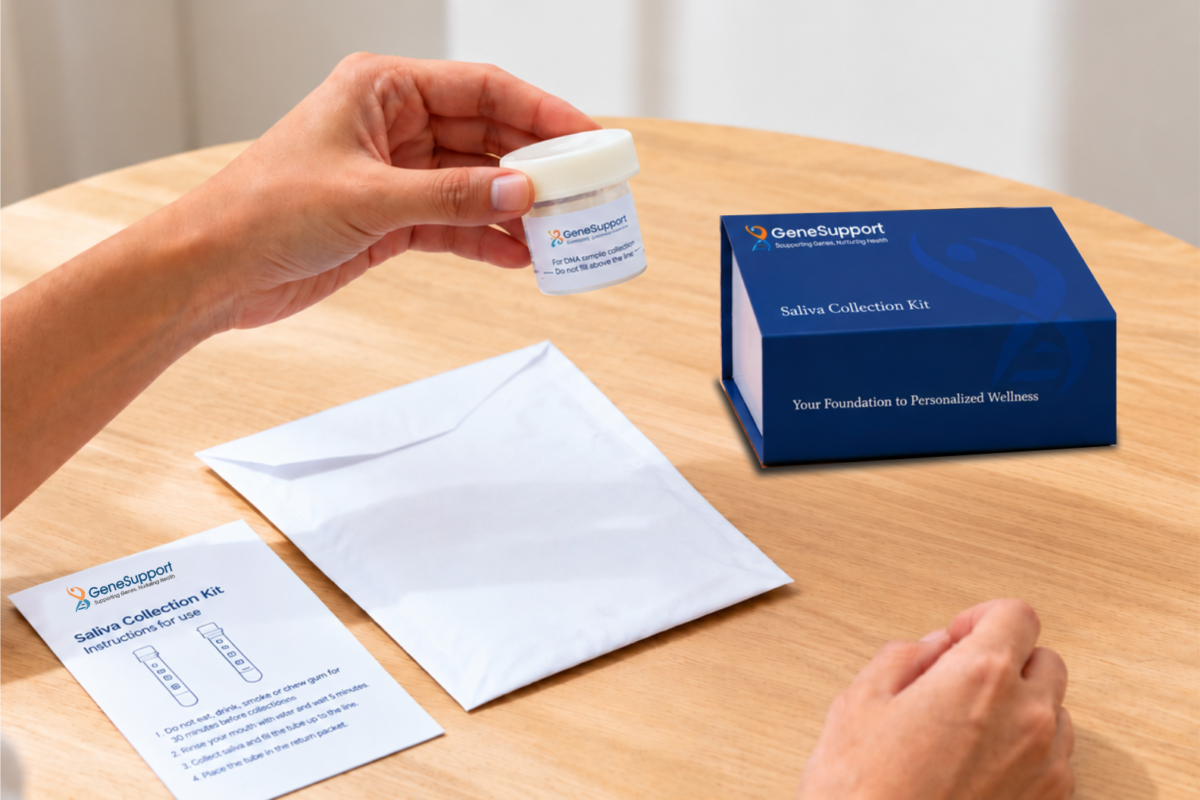
DNA test kit price in India with GeneSupport saliva collection kit for personalised genetic testing and wellness insights.

DNA Test Kit Price in India: Which Kit Is Worth It in 2026?

Search for a genetic test online and you’ll find prices anywhere from ₹2,500 to well over ₹30,000. It’s the same saliva, yet the bills look wildly different, so it’s fair to ask what you’re actually paying for.

Here’s the honest answer: the DNA test kit price depends less on the kit and more on what happens after your sample reaches the lab. How much of your DNA is read, how well the lab is run, and whether anyone helps you turn results into changes you can make. GeneSupport has looked at genetic testing through that lens for more than 20 years, and it’s the lens we use here to compare five options available to Indian buyers.


What Is the Cost of a DNA Test in India?

Quick answer: Most consumer DNA tests in India cost between ₹2,500 and ₹20,000. Health and nutrition tests usually fall between ₹7,000 and ₹13,000. GeneSupport’s nutrigenomics DNA test costs for weight loss  ₹13,000, with expert interpretation of your results. Clinical whole genome sequencing can cost close to ₹90,000.

The DNA test kit price in India rises with depth, but depth alone doesn’t make a test useful. A report listing hundreds of traits means little if you still don’t know what to eat, how to train or what to watch for. For most people focused on diet, weight or family health risks, a well-interpreted test delivers far more value than a longer list of results.


Why Does the DNA Test Kit Price Vary So Much?

The price you pay isn’t just for the test kit in your hands. It also covers the five factors below, which together explain most of the gap between a budget test and a premium one 

  • How much DNA is read. Targeted panels check specific gene variants linked to traits such as caffeine metabolism or lactose tolerance. Whole genome sequencing reads nearly everything, which is why it costs several times more.
  • What the test is for. Health, ancestry and paternity tests use different methods and reference databases, so their prices aren’t directly comparable.
  • Lab quality. Accreditation such as NABL or ISO/IEC 17025 means a lab’s processes are independently audited. GeneSupport’s tests are processed in a quality-accredited lab.
  • Interpretation. A PDF full of gene names is cheap to produce. A counsellor or dietitian who turns those results into a plan is not, and that guidance is a core part of what GeneSupport’s price covers.
  • Import costs. Kits shipped from overseas carry courier fees, customs duty and reseller markups. Tests processed in India, like GeneSupport’s, avoid these entirely.

DNA Test Kit Price Comparison: GeneSupport vs Mapmygenome vs 23andMe vs AncestryDNA vs Genetrack

Here’s how five popular options stack up on price, what they test, availability in India and the support you get. Prices are list prices as of October 2026; foreign kits are in US dollars, and your rupee cost will rise once shipping and duties are added.

Comparing the Top DNA Test Kits in India

1. GeneSupport: ₹13,000 

GeneSupport has worked in DNA-based wellness for over 20 years, built around one idea: precision in personalisation. Its saliva-based nutrigenomics test looks at the genes that shape how your body handles food, weight and everyday habits. More importantly, it doesn’t leave you alone with a report. An online consultation turns your results into a diet, weight and lifestyle plan you can actually follow.

  • Price: ₹13,000, 
  • What it tests: Diet, weight, lifestyle and health-related genes
  • Available in India: Yes, processed in a quality-accredited lab in India
  • Expert support: Online counsellor and dietitian consultation .
  • Best for: A personalised plan you can act on, backed by two decades of trust and expertise

Heart-focused panels and Gut Microbiome Profiling are also available. Your test works alongside any ongoing medical care and doesn’t replace your doctor’s advice or affect your current treatment.

2. Mapmygenome: ₹7,999

Mapmygenome’s Genomepatri covers over 100 traits, including disease risks and medication response, with a free counselling session. It suits people who just want a broad overview, though a wide trait list can be harder to turn into daily changes without ongoing dietitian support.

  • Price: ₹7,999 (often ₹7,499 via partners)
  • Available in India: Yes
  • Best for: A broad snapshot of many traits
3. 23andMe: $99 to $199

23andMe sells an ancestry kit at $99 and a Health + Ancestry kit at $199. It doesn’t ship directly to India, so buyers rely on resellers, and samples travel back to the US for processing.

  • Price: $99 / $199, plus shipping, customs and reseller markup
  • Available in India: Only via resellers
  • Best for: Ancestry with some health reports
4. EasyDNA Discreet Test: From ₹7,299

EasyDNA’s discreet test lets you use non-swab samples, such as hair with roots, a toothbrush or a cigarette butt, for relationship tests like paternity. The ₹7,299 is an add-on to the base test you order, success rates vary by sample type, and results can take longer than with standard swabs. It isn’t designed for health or nutrition insights.

  • Price: From ₹7,299, added on top of the base test
  • Available in India: Yes, with an India office in Kolkata
  • Best for: Private relationship testing using non-swab samples

5. Genetrack India: ₹13,000

Genetrack specialises in relationship testing rather than health. Its paternity test costs ₹13,000 and its sibling test ₹19,510, with samples processed at its Canadian lab.

  • Available in India: Ships from Canada
  • Best for: Paternity and relationship answers

Hidden Costs Behind the Sticker Price

The headline price is rarely the full story. Before you pay, check for:

  • Customs duty and reseller markups on imported kits
  • Subscriptions, such as 23andMe+ Premium at $69 a year on top of the kit
  • Paid counselling if interpretation isn’t included
  • Longer waits when samples are shipped abroad
  • Retest fees if your first sample doesn’t yield enough DNA

With GeneSupport, you pay one rupee price for a test processed in India, with expert interpretation built in.


Which DNA Test Kit Is Worth It for You?

The right kit depends on what you want to find out.

1. You want a diet and weight plan that suits your body: GeneSupport’s nutrigenomics DNA test is built for exactly this. A cheaper report without guidance often ends up unread in an inbox.

2. Heart problems run in your family: GeneSupport’s heart-focused tests look at genes such as APOE, and you review the results with an expert. These tests show predisposition, not a diagnosis.

3. You’re dealing with ongoing gut issues: A DNA test can’t tell you about your gut bacteria. GeneSupport’s Gut Microbiome Profiling analyses a stool sample to show what’s happening in your gut.

4. You’re curious about your roots:  23andMe will suit you if you accept the import costs. Mapmygenome’s Genomepatri Heritage focuses on Indian ancestry.

5. You need a paternity answer:  Choose an accredited relationship-testing lab such as Genetrack. For legal use, make sure the test follows a chain-of-custody process.


How to Buy a DNA Test Kit in India Safely

Before you order any DNA test kit, India’s Digital Personal Data Protection Act, 2023 gives you rights over your data, so use them. Run through this checklist:

  1. Is the lab accredited (NABL, ISO/IEC 17025 )?
  2. Where will your genetic data be stored?
  3. Can you withdraw consent and request deletion?
  4. Who will interpret your results with you?
  5. What is the refund and retest policy?
  6. Are you buying from the brand or an authorised seller?


The Bottom Line

The cheapest kit isn’t always the best value, and the most expensive isn’t always the most useful. Compare the DNA test kit price against what you’ll actually do with the results. For diet, weight and everyday health goals, GeneSupport’s ₹13,000 DNA test combines 20+ years of experience, an accredited lab in India and expert guidance, which is why it’s our pick. See what your report will include before you decide.


Frequently Asked Questions

1. How much does a DNA test kit cost in India? 

Most consumer kits cost between ₹2,500 and ₹20,000. The DNA test kit price in India depends on test coverage, lab accreditation and whether expert interpretation is included.

2.Is GeneSupport’s ₹13,000 DNA test worth it? 

If you want results you can act on, yes. You get a test processed in an accredited lab in India, backed by over 20 years of experience and an expert consultation. It doesn’t diagnose disease or replace medical care.

 3.What is the DNA test procedure for a home kit?

The DNA test procedure is simple: choose your test, collect a saliva sample at home using the kit, send it back to the lab and receive your report. With GeneSupport, an expert then explains your results in an online consultation. 

4. Is a more expensive DNA test always more accurate?

Not necessarily. Accuracy depends on the lab’s quality standards. A higher price usually reflects broader coverage or added services, such as counselling.

 5. Do I need a prescription for a DNA test kit? 

Consumer wellness and nutrigenomics kits generally don’t need one. Clinical diagnostic tests are usually ordered by a doctor.


Note: Prefer to shop on Amazon? The Gene Support DNA test kit is also available on Amazon India. 

Woman using the GeneSupport DNA saliva collection kit for personalised wellness and genetic testing.

DNA Test Procedure: How a Home DNA Test Kit Works

Can a DNA Test Be Done at Home?

Yes, many DNA tests allow you to collect your sample at home. But there is an important distinction: collecting your DNA sample at home does not usually mean analysing your DNA at home. The sample is generally sent to a laboratory for testing.

This makes DNA testing more accessible without compromising the importance of laboratory analysis.

But what happens after you order a kit? How is DNA extracted from a saliva sample? And how reliable are the results?

Understanding the DNA test procedure helps you know what to expect, what to check before buying a test and how to interpret the information you receive.


What Is a DNA Test?

DNA carries genetic information inherited from our parents. A DNA test examines this material to identify specific genetic variations or other features, depending on the purpose of the test.

DNA testing is used in several fields, including:

  • Genetic health testing: Investigating selected variants associated with inherited conditions.
  • Nutrigenomics: Studying how genetic variations may relate to nutrition and lifestyle.
  • Pharmacogenetics: Examining genetic factors that can influence responses to certain medicines.
  • Ancestry testing: Exploring genetic ancestry and biological relationships.

These tests do not all examine the same genes or answer the same questions. A test designed to study selected lifestyle-related genetic variations, for example, is not equivalent to a diagnostic test for an inherited disease.

Understanding this distinction is the first step towards choosing the right test.


How Does the DNA Test Procedure Work?

The process generally involves five stages, although the exact steps depend on the test, sample type and laboratory method.

Step 1: Choose the Right DNA Test Kit

Start with a simple question: what do you want to learn?

Your objective could be to investigate a specific genetic condition, explore ancestry or understand selected genetic factors relevant to nutrition and lifestyle.

For example, a nutrigenomics test may examine genetic variations associated with aspects of nutrition, caffeine metabolism or exercise response, depending on the panel.

Before ordering, check what the test covers, which laboratory performs the analysis, how the sample is collected and what support is available to interpret the report.

A longer list of genes does not automatically make a test more useful. What matters is whether the test is appropriate for your objective and whether its findings are supported by relevant evidence.

Step 2: Receive Your Home DNA Test Kit

A home DNA test kit typically contains a saliva collection tube or cheek-swab device, instructions, sample identification details and packaging for returning the sample.

The contents vary between providers.

Some tests use saliva, while others collect cells from the inside of the cheek. Preparation requirements can also differ. For instance, a particular saliva kit may instruct you not to eat or drink for a specified period before collection.

Read the instructions supplied with your kit carefully. Do not assume that the collection procedure is identical for every DNA test.

Step 3: Collect Your DNA Sample at Home

Can We Check DNA at Home?  Not exactly, but sample collection for many DNA tests can be completed at home.

In a saliva-based test, you provide saliva using the supplied collection device. In a cheek-swab test, you gently collect cells from the inside of your cheek using the specified swab.

These cells contain DNA that can be extracted for laboratory analysis.

To help ensure your sample is suitable for testing:

  1. Follow the kit’s preparation instructions.
  2. Use the supplied collection device correctly.
  3. Avoid contaminating the sample or collection equipment.
  4. Close and label the sample as instructed.
  5. Complete any required sample registration.
  6. Return it using the prescribed packaging and delivery method.

Incorrect collection, handling or labelling can delay testing or make the sample unsuitable for analysis.

Once the sample is ready, it is sent to the designated laboratory. This is where genetic analysis generally takes place.

Step 4: Laboratory Analysis of Your DNA

The laboratory processes your sample using methods appropriate to the test.

DNA extraction: Genetic material is separated from the collected cells.

Quality assessment: The laboratory checks whether the extracted DNA meets the requirements for the intended analysis.

Genetic analysis: The laboratory examines the relevant genetic features using a suitable method. Depending on the test, this may involve genotyping, DNA sequencing or another analytical technique.

Data assessment: The resulting data are processed and checked according to the laboratory’s procedures.

Report preparation: Findings are interpreted within the scope of the test and compiled into a report.

Not every DNA test uses the same technology. The method must be suitable for the genetic features being examined, and the laboratory should have appropriate quality-control and validation procedures.

This is why understanding the test’s scope and laboratory process matters more than relying on broad claims about the number of genes examined.

Step 5: Receive and Understand Your DNA Report

After the analysis and required quality checks, the report is prepared. The turnaround time depends on the testing service, sample quality and laboratory workflow.

The next step is understanding what the findings mean.

For a nutrigenomics test, selected genetic variations may provide information relevant to aspects of nutrition or lifestyle, depending on the panel and the supporting evidence.

However, genes are only one influence on health. Dietary habits, physical activity, sleep, medical history, environment and other factors also matter.

A genetic report should therefore be interpreted in context. It is not a complete assessment of your health, and it should not be used as a substitute for medical evaluation when one is needed.


Is a DNA Test 100% True?

The honest answer is that no single accuracy claim applies to every DNA test.

A properly validated test can accurately identify the genetic variants it is designed to detect. However, analytical performance depends on the testing method, sample quality and the variants being examined.

It is also important to distinguish between three concepts:

  • Analytical validity: How accurately does the test detect the genetic feature it is designed to measure?
  • Clinical validity: How reliably is that feature associated with the trait, condition or risk being assessed?
  • Clinical utility: Does the information help inform a meaningful decision?

These are different aspects of test quality.

For example, a test may accurately identify a genetic variant without being able to predict exactly how a person will respond to a particular diet or whether they will develop a specific condition.

Similarly, not finding a particular variant does not rule out every possible genetic explanation for a disease.

When evaluating a DNA test in India, look beyond claims such as “100% accurate.” Ask what the test measures, what evidence supports the interpretation and what limitations apply.


What Should You Check Before Buying a DNA Test in India?

Before ordering a home DNA test kit, consider these five factors.

  1. Test scope: Are the genes or genetic markers examined clearly specified?
  2. Laboratory quality: Are appropriate analytical methods, quality controls and validation procedures in place?
  3. Accreditation: Can you verify the laboratory’s credentials and the scope covered by its accreditation? Accreditation should not automatically be assumed to cover every test offered.
  4. Report interpretation: Does the report explain findings in context rather than making sweeping promises?
  5. Data privacy: Does the provider explain how your genetic information and sample are stored, accessed, retained and potentially shared?

These checks help you evaluate the entire testing process, not just the kit itself.


How Does DNA Testing Support Personalised Lifestyle Planning?

General health advice is useful, but individuals differ in their genetics, medical history, habits, environment and goals.

Nutrigenomics studies how genetic variations relate to nutrition and other aspects of health and lifestyle. Depending on the test panel and available evidence, these findings may provide additional context for lifestyle planning.

For example, information about selected genetic variations associated with caffeine metabolism can be considered alongside a person’s caffeine intake, sleep routine and actual response to caffeine.

Similarly, selected genetic findings related to exercise response can be considered alongside current fitness, training history, health conditions and personal goals.

The objective is not to let DNA dictate every decision. It is to use relevant genetic information as one part of a broader assessment.

At GeneSupport, DNA-based lifestyle insights are intended to support informed planning by considering genetic findings alongside the individual’s current health, lifestyle and requirements.

The value lies in using the information appropriately—not assuming that genes alone determine the best diet, exercise routine or health outcome.


Conclusion: Understand Before You Test

The DNA test procedure generally follows a straightforward sequence: choose a suitable test, collect the required sample, send it to the laboratory, analyse the genetic material and interpret the findings.

A home DNA test kit makes sample collection convenient, while laboratory analysis provides the genetic information required for reporting.

Before choosing a DNA test in India, ask three questions: What does it examine? How reliable and relevant are the findings? And how can the information be used responsibly?

DNA testing cannot tell you everything about your health or future. But when a test is appropriate and its findings are interpreted correctly, genetic information can contribute to better-informed decisions.

Your genes provide information. Understanding that information is what makes it useful.