

Your DNA: The Silent Compass of Your Health

The Blueprint vs. The Trend

We live in an era of “health noise.” Every week, a new superfood is crowned, and a new workout is labeled “essential.” But if health were a simple math equation, we would all be at our peak. Why does one person thrive on a plant-based diet while another feels depleted? Why does a morning run energize your neighbor but leave you exhausted?

The answer isn’t that you are “failing” the diet; it’s that the diet might be failing your biological blueprint.

Tuning Your Instrument

Think of your body as a high-end musical instrument. You can’t play a violin with a cello bow and expect a masterpiece. Your DNA is the “tuning” of your specific instrument.

Most health advice is written for the “average” person—but the average person doesn’t exist. When you understand your genetic markers, you stop “guessing” which strings to pull. You finally have the sheet music for your own body.

The Science of Bio-Individuality

Health is not a destination; it is an act of precision. Our genes dictate the “finer details” that general health trends miss:

  • Nutrient Conversion: Some bodies are maestros at converting sunlight into Vitamin D or plant-based fats into brain-healthy DHA; others are genetically sluggish at it.
  • Metabolic Pace: Your genes determine if you are a “sprint” burner or an “endurance” burner. Forcing the wrong pace creates biological friction, leading to burnout.
  • The Stress Response: DNA influences how quickly your body clears cortisol. What one person calls “exciting stress” might be “toxic stress” to your cellular system.

Empowerment Through Clarity

The goal of genomic awareness isn’t to restrict your life – it is to liberate it.

When you align your lifestyle with your biology, you stop fighting an uphill battle. You gain “Ageless Energy” because you are no longer wasting resources on habits that don’t serve your code. You move from a state of trying to be healthy to a state of being compatible with yourself.

The Path Forward

True wellness is the ultimate act of self-respect. It begins with curiosity: What does my body actually need to thrive? By shifting the focus from “what the world says is healthy” to “what my biology says is necessary,” you transform your health from a chore into a lifestyle of ease. Listen to the code within—it’s the only health authority that truly matters.


ChronoGenomics: How Your Biological Clock Influences When You Eat

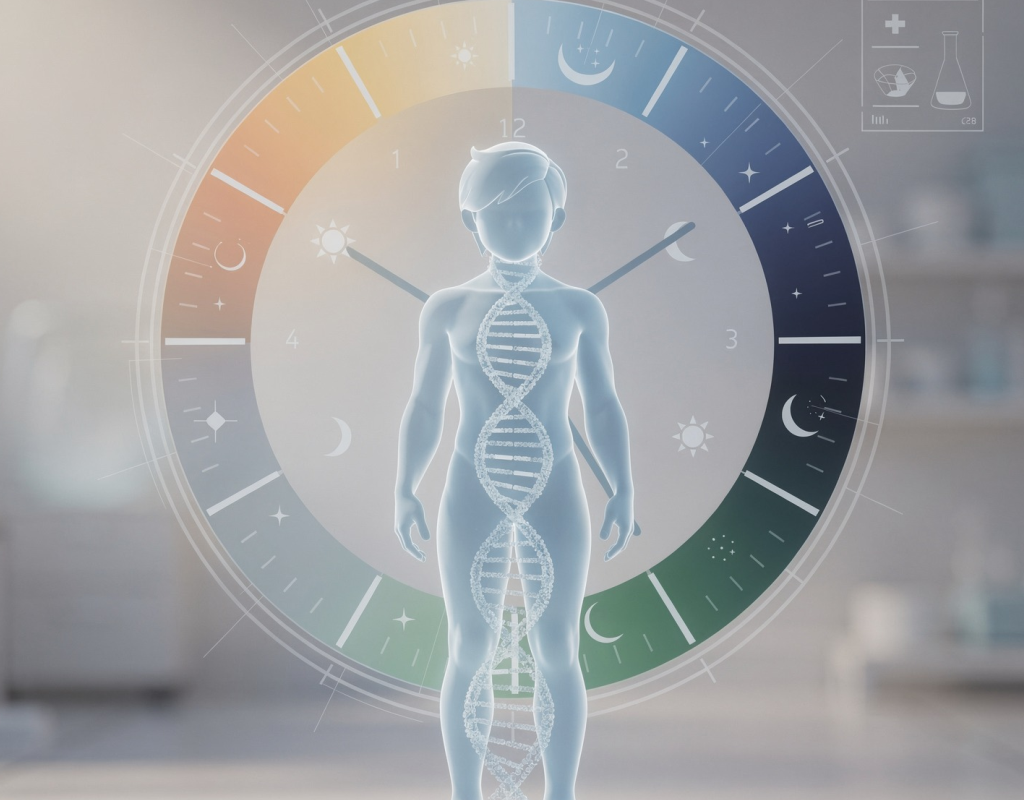
ChronoGenomics is the study of how the body’s circadian rhythm interacts with genetic is the study of how the body’s circadian rhythm interacts with genetic variation to influence metabolism, digestion, and energy use throughout the day. It helps explain why meal timing can affect individuals differently based on their biological clock and genetic makeup.

Most nutrition advice focuses on what to eat. Increasingly, research suggests that when you eat can also influence metabolic health, particularly when individual biological differences are considered.

ChronoGenomics brings together two well-established 

areas of science—circadian biology and genetics—to better understand why people respond differe

ntly to the same eating patterns.

What Is the Circadian Rhythm?

The circadian rhythm is the body’s internal 24-hour clock. It regulates essential processes such as:

  • Sleep–wa
  • ke cycles
  • Hormone secretion
  • Digestion and metabolism
  • Energy utilization

These processes follow daily patterns. For many people, the body handles nutrients more efficiently earlier in the day, while metabolic activity tends to slow toward night. However, this pattern is not identical for everyone.

How Circadian Rhythm Influences Metabolism

Circadian rhythms affect key metabolic functions, including:

  • Insulin sensitiGlucose regulation
  • Fat storage and energy expenditure

Research suggests that glucose tolerance often declines later in the day, which may influence how the body responds to the same meal eaten at different times. Disruptions to circadian rhythm—such as irregular sleep or inconsistent meal timing—may further affect metabolic regulation.

These effects are influenced by lifestyle factors, but biology also plays a role.

Where Genetics Fits In

Certain genes are involved in regulating circadian timing and metabolic responses. Variations in these genes can influence:

  • How the bodyresponds to carbohydrates and fats
  • Appetite and hunger signalling
  • Stress hormone release
  • Preference for earlier or later activity and eating

These genetic differences do not determine outcomes on their own. Instead, they shape tendencies, helping explain why identical diets or meal schedules may produce different results in different people.

ChronoGenomics does

 not change nutrition fundamentals—it adds biological context.

Does Meal Timing Affect Everyone the Same Way?

No.

Studies suggest that:

  • Late eating may be associated with less favorable metabolic markers in some individuals
  • Consistency in meal timing may support metabolic stability
  • Responses vary based on sleep, activity levels, stress, and genetics

This variability is why rigid eating rules often fail. ChronoGenomics encourages a more individualized perspective, focusing on patterns and responses rather than fixed schedules.

The Relationship Between Sleep and Eating Time

Sleep and metabolism are closely connected.

Poor or irregular sleep

can:

  • Disrupt hunger and satiety hormones
  • Reduce insulin sensitivity
  • Increase cravings for energy-dense foods

Similarly, eating heavy meals close to bedtime may interfere with sleep quality for some people, which can then influence metabolic function the following day. Aligning eating habits with natural sleep–wake cycles may support both digestion and rest.

Practical, Evidenc

Without adopting extreme approaches, circadian research commonly supports:

  • Keeping meal times relatively consistent
  • Avoiding heavy meals close to bedtime when possible
  • Paying attention to energy and hunger patterns across the day
  • Prioritizing sleep regularity alongside nutrition
  • Accepting that individual responses vary

These strategies emphasize awareness and flexibility, not restriction.

Why ChronoGenomics Is Gaining Attention

As nutrition science evolves, there is growing recognition that:

  • Individual variability matters
  • One-size-fits-all advice has limitations
  • Sustainable health strategies benefit from personalization

ChronoGenomics reflects a broader shift toward understanding how timing, biology, and lifestyle interact, without overpromising outcomes.

Key Takeaway

Meal timing is not about trends or rigid rules.
It is about understanding how your body responds at different times of the day.

ChronoGenomics

 offers a thoughtful framework to explore:

  • When you eat
  • How sleep and stress interact with metabolism
  • Why responses differ between individuals

Informed choices begin with awareness—not assumptions